


When twenty-three-year-old Aishat Baimuradova left her home last year, she felt she finally had a chance to live the way she wished.
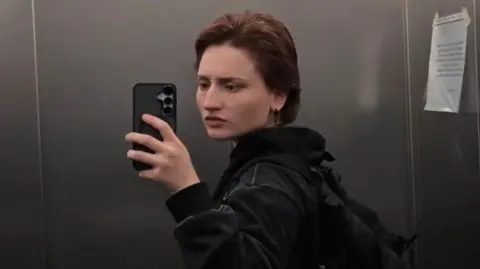
Hailing from Chechnya, a conservative Muslim region in Russia, she cut her hair brief, stopped covering her head, shaved part of her eyebrow and posted eccentric selfies on Instagram.
She informed her new friends she could finally feel free.
In October, Aishat was found deceased in a leased flat in neighbouring Armenia. Police say she was killed.
Two people were spotted exiting the building where she was found, including a woman Aishat had met not long before her death. Both allegedly left for Russia soon afterwards.
Russians do not need a passport to enter Armenia; their domestic identification is enough. That also makes it an convenient route for anyone trying to flee.
The Chechen Republic: A Autonomous Territory
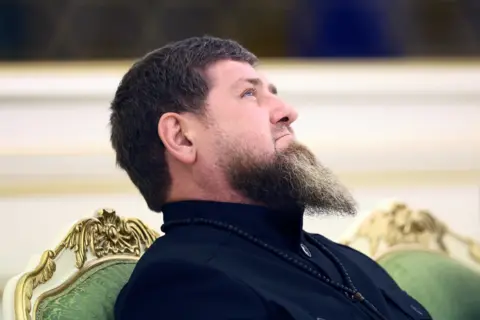
Chechnya, in Russia's North Caucasus, is often portrayed by rights groups as a state within a state - a place where authority is highly personalised and loyalty to long-standing leader Ramzan Kadyrov often over-rides laws and formal institutions.
For years, human rights organisations have reported abductions, abuse and summary deaths in the republic, as well as organized targeting of those who disagree.
Chechen officials have continually denied these allegations, complaining of inventions aimed at discrediting the region.
History of Opponents Killed Abroad
Numerous prominent critics of Chechen authorities have been killed abroad.
In 2009, Umar Israilov, a former bodyguard of Ramzan Kadyrov, was killed in Vienna, where he had sought asylum. Austrian authorities called the assassination linked to political reasons and connected the killers to Chechnya.
Former Chechen rebel Zelimkhan Khangoshvili was shot dead in a Berlin park in 2019, in an attack blamed to Russian security services.
But Aishat Baimuradova is the first known Chechen woman to have lost her life in questionable circumstances, not long after fleeing Russia.
Aishat's Journey to Independence
Like many other women who escape the region, she had spoken of being controlled by her family. She said she was forced into a marriage, monitored, and barred from leaving home or using her phone.
Aishat came in Armenia at the end of 2024 with the help of a aid network that helps people facing danger in the North Caucasus. She had spoken publicly of conservative gender rules and the stifling control women face in Chechnya.
At first, she worked in a small town, then moved to the capital, Yerevan, wanting for a superior job and more chances.
To many who leave, such visibility is impossible. Most use false names, avoid showing their faces, and refuse to meet new people. Aishat selected a different path. "She really wanted a ordinary life," her friend who asked to remain anonymous said. "And she wanted to have faith in people."
Kin Reaction and Rejection
Her family tried to persuade her to come back, but when nothing came of it they cut ties with her, according to support groups.
"They said to her: 'You are no longer our daughter or our wife. We won't touch you - just don't touch us,'" a spokesperson for the support organization explained.
Her uncle told local media the family had no involvement in her death.
Final Days and Questionable Contacts
On the night of her death, Aishat was with a woman she had recently met online, who said to come from Dagestan, another Russian republic in the North Caucasus.
People who knew Aishat said it was the woman who had first made contact with her on social media, later coming to Armenia and inviting her to parties.
A man recorded with her on CCTV as they left the building where Aishat's body was found was reported by sources to be of Chechen origin. Investigative outlets recognized him as a relative of a businessman connected to Ramzan Kadyrov.
Authority Response and Inquiry
Chechen authorities reject any connection to Baimuradova's death, criticizing such suggestions as a "disinformation campaign". Officials have also attacked groups assisting women who flee, alleging them of "undermining family traditions".
Armenian authorities say they are investigating two unnamed people in connection with Aishat Baimuradova's murder, but they have shared no further details about them.
Strategic Context
Ramzan Kadyrov is responsive to people opposing Chechnya from abroad, says Michael Dennis, an expert on Chechen politics.
"The very existence of a diaspora is a evident signal to the entire world that something is wrong in Chechnya. It's a matter of personal pride and political image," Mr Dennis explained.
Since the early 2000s, asylum seekers from Chechnya have been coming to Europe - fleeing first the war and later Kadyrov's repressive rule.
But changes to EU migration policy, followed by visa restrictions for Russians because of the war in Ukraine, have all but blocked that route.
That leaves the South Caucasus, where Russians can travel visa-free, as the simplest escape route, but far from the safest.
Effect on Other Chechen Women
In July, another escapee, 24-year-old Laura Avtorkhanova, was found in a shelter in Georgia by a group of male relatives who reportedly tried to force her into returning to Russia. After being questioned by police she was able to stay safely in Georgia.
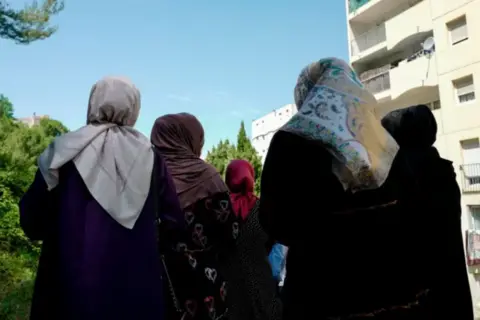
For other Chechen women who have fled, Aishat's death has renewed a fear that has troubled them since they left Russia.
Several have described how even before her murder they had steered clear of community events, avoided speaking Chechen in public and restricted their social media presence.
Now they worry it may not be sufficient to conceal from those who may want to target them.
"The fear I've lived with all my life - embedded in my DNA - has come back with new strength," said one escapee living in Western Europe, who asked to hide her name and precise location.
"It's like sleep paralysis: a monster appears, and I lie there paralyzed, staring into its eyes. It's the fear of being killed."
"You can escape," she said, "but you never really feel free."


